
A B2B Guide to Matte, Eggshell, Satin, Semi-Gloss, and Shiny Surface Finishing
When launching a new watch project or refining an existing collection, how a watch case interacts with light dictates its entire market positioning. A luxury dress watch requires a radically different surface treatment than a rugged tactical field watch.
To help our OEM and ODM clients communicate design requirements accurately and streamline the sampling process, this guide breaks down the five primary levels of surface finishes for watch parts—specifically watch cases, bezels, and bracelets—and how we achieve them on the factory floor.
The Watchmaking Sheen Spectrum
In watch manufacturing, finishes are broadly categorized by their light reflectivity (sheen) and the texturing techniques used on metal alloys (such as 316L Stainless Steel, Titanium, or Bronze).
| Finishing Level | Visual Effect on Watch Cases | Primary Horological Technique | Common B2B Application |
|---|---|---|---|
| 1. Matte / Matt | Completely flat, zero reflection, rugged aesthetic. | Sandblasting / Bead-blasting | Military, tactical, and tool watches. |
| 2. Eggshell | Subtle, non-reflective micro-texture; dull metallic. | Acid etching / Fine media blasting | Vintage re-editions, minimalist dials/cases. |
| 3. Satin | Linear or circular brushed graining; silky lustre. | Brush finishing (wheels/lapping) | Sports watches, tool bezels, case flanks. |
| 4. Semi-Gloss | Softly reflective but distinct brushed grain lines. | Fine polishing compound over satin | Casual fashion and contemporary dress watches. |
| 5. Shiny / Gloss | Mirror-polished, flawless, high-reflection. | Zaratsu / Mirror-lapping polishing | Luxury dress watches, chamfers, bevels. |
Deep Dive: The 5 Surface Levels
1. Matte / Matt Finish
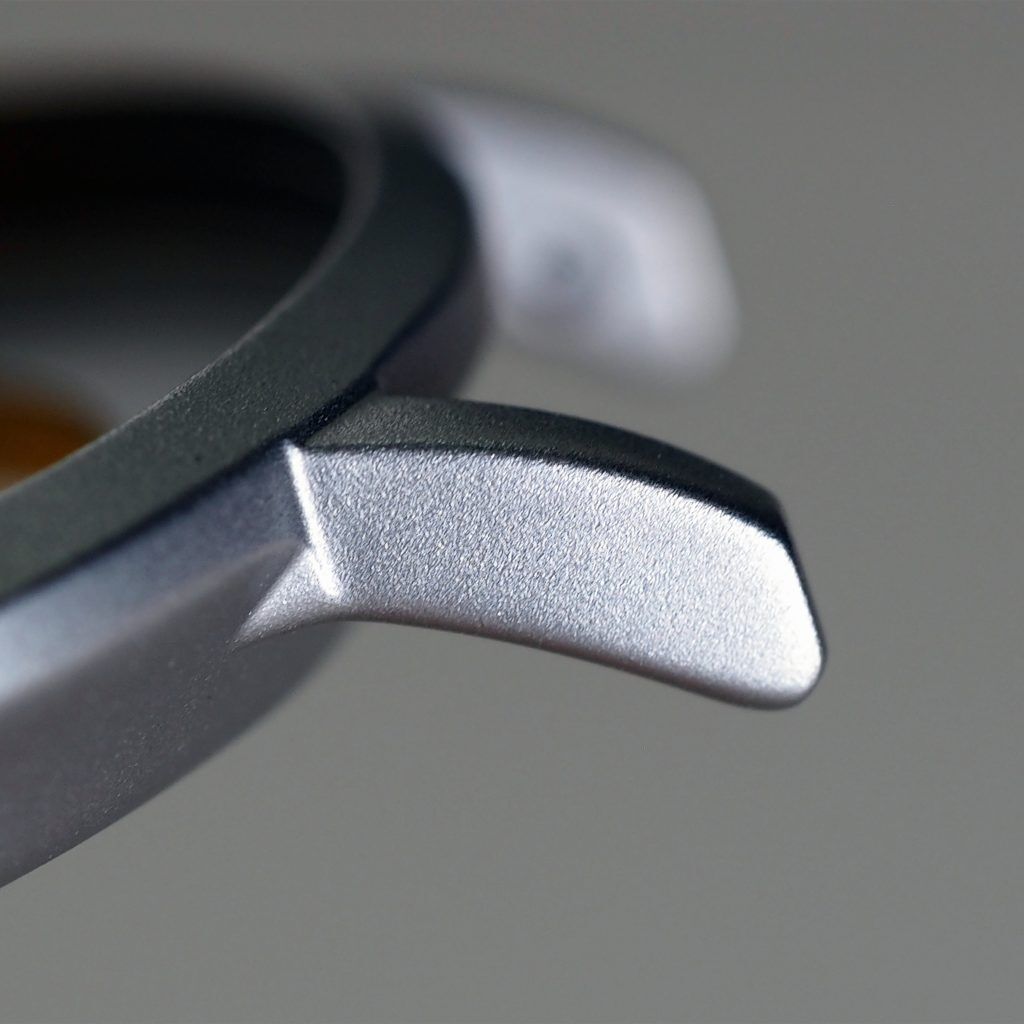
- The Look: A completely uniform, muted finish with zero specular reflection. It absorbs light entirely, giving the metal a dark gray or technical appearance.
- How We Achieve It: We use automated bead-blasting or sandblasting cabinets. Fine ceramic beads, aluminum oxide, or glass particles are propelled at high pressure against the machined case blanks.
- Pros: Outstanding at hiding micro-scratches or raw machining marks. It does not show fingerprints.
- Best For: Tactical tool watches, pilot watches, and deep-sea divers where anti-glare properties are mandatory.
An example of our factory bead-blasted matte finish on tool-watch cases:
2. Eggshell Finish
- The Look: Sits subtly between matte and satin. It features a micro-grained texture that is smoother than sandblasting but completely lacks directional brush lines. It offers an understated, velvety metallic look.
- How We Achieve It: Accomplished through specialized chemical acid-etching or using ultra-fine organic blasting media (like walnut shells) at low pressure.
- Pros: Provides a premium, non-industrial texture that feels silky to the touch.
- Best For: Minimalist dress watch cases, custom mid-cases, or sand-textured dials.
An example of our non-directional micro-textured eggshell surface finishing:

3. Satin (Brushed) Finish
- The Look: The industry favorite for premium sports watches. It displays a directional, microscopic grain pattern that reflects light in sharp, linear bands, producing a rich satin lustre.
-
Defining the Brushing Lines (Coarse vs. Fine): When designing a watch case, the thickness and visibility of the brushing lines can be customized based on your brand's aesthetic. We define this on the factory floor using two parameters:
- Fine Satin Brushing (Tiny Lines): Achieved using 320 to 400+ grit abrasives. The lines are tightly packed and microscopic. From a distance, the metal looks like a soft, velvety texture that glows rather than showing individual lines. This is the standard for luxury sports and dress watch cases.
- Coarse Brushing (Big Lines): Achieved using 120 to 240 grit abrasives. The lines are deeper, wider, and highly visible to the naked eye. This gives the watch a rugged, highly structural, and industrial aesthetic. This is best suited for tool watches or tactical dive bezels.
-
How We Achieve It: Our technicians press the watch components against specialized abrasive wheels or flat lapping machines. We can customize the pattern direction based on your technical drawings:
- Linear / Vertical: Lines run straight down the lugs and along the case sides.
- Horizontal: Lines follow the profile geometry from left to right.
- Radial / Circular: Lines curve in a perfect circle around a center point, frequently specified for circular bezels and solid casebacks.
-
Equipment Methods: Depending on your target price point and quality tier, we offer two production paths:
- Satin Wheel Brushing: Done on rotating abrasive flap wheels. It yields a traditional, soft satin look perfect for casual and fashion watch lines.
- Lapping Machine Brushing: Done by pressing the case flat against a rigid, rotating abrasive disc. This creates perfectly straight, razor-sharp geometric transitions and uniform grain lines required for premium, luxury-grade watch micro-surfacing.
- Pros: Highly durable against daily scuffs. If minor scratches occur during wear, they blend naturally into the existing grain direction.
- Best For: Luxury sports watch cases, outer integrated links on bracelets, and tool watch bezels.
An example of our linear and circular satin brushing techniques on a watch case:

4. Semi-Gloss Finish
- The Look: A balanced, upscale finish that retains a faint brushed grain texture underneath but is coated with a semi-polished sheen. It catches the light actively without behaving like a pure mirror.
- How We Achieve It: We first apply a high-grit satin brushing, followed by a light buffing pass on a cloth polishing wheel using a medium-grade compound.
- Pros: Offers a clean, dressy aesthetic that brightens up a watch layout while remaining resilient against prints and light smudges.
- Best For: Casual fashion watch cases, crown guards, and inner bracelet links.
An example of a soft brushed grain beneath a bright semi-gloss surface layer:

5. Shiny (Gloss / Mirror / High-Gloss) Finish
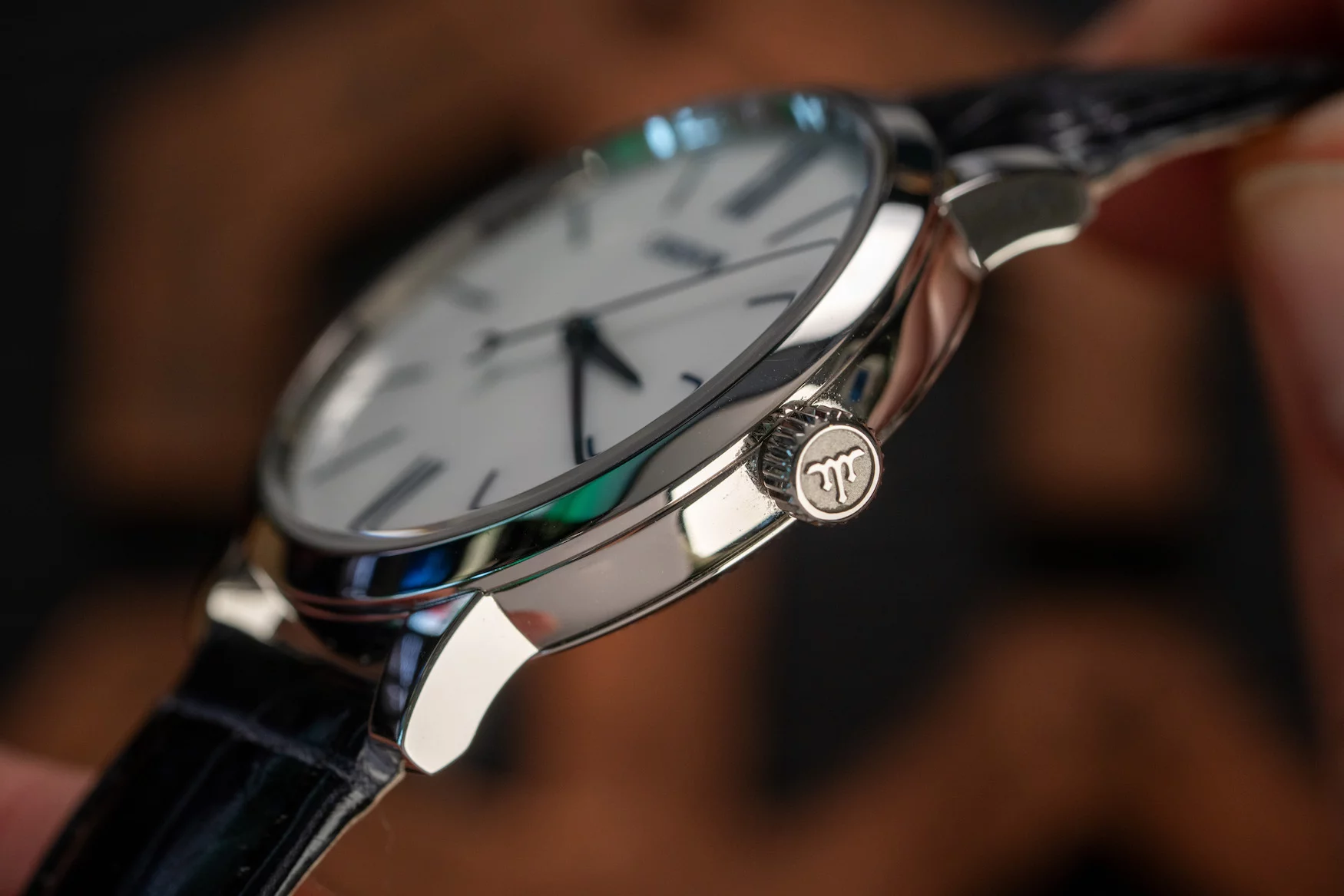
- The Look: A pristine, fluid, mirror-like surface. Reflections are crisp and undistorted, making the watch look exceptionally high-end and jewelry-grade.
- How We Achieve It: Multi-stage buffing and lapping (Zaratsu-style technique). The case components are held against rotating cotton disks loaded with progressive diamond or metal-oxide compounds until all micro-imperfections are entirely polished out.
- Pros: Striking visual impact on retail shelves and luxury presentation.
- Cons: Highly susceptible to fingerprints and visible "desk-diving" micro-scratches.
- Best For: Luxury dress watch cases, polished bezels, crowns, and case chamfers/bevels.
An example of our distortion-free, mirror-polished high-gloss finish:
Maximizing Value: Mixed Finishes
Most iconic watches do not rely on a single finish. High-end watchmaking thrives on contrast.
For example, we highly recommend specifying a brushed satin finish on the flat top surfaces of the case to hide daily wear, paired with a mirror-polished shiny chamfer (bevel) along the edge to catch the light sharply.
How to Specify Finishes in Your RFQ / Tech Pack
When submitting your design file (2D render or 3D CAD step file) to our engineering team, please clarify:
- Exact Areas: Use callouts to label precisely which facets are matte, satin, or shiny.
- Grain Direction: For satin finishes, specify if you require vertical, horizontal, or circular brushing.
- Coating Context: If you plan to add PVD or DLC color coatings (e.g., Rose Gold, Matte Black), remember that the coating mimics the underlying finish. A polished case results in a shiny PVD watch; a blasted case results in a matte PVD watch.
Contact our sales department today to request a physical metal finishing sample kit for your team's reference.